Sustainable Mining in Africa
Mining in Africa is a cornerstone of the continent’s economic development, providing vast opportunities for investment, employment, and industrial growth. With approximately 30% of the world’s mineral reserves, Africa is home to some of the most sought-after resources, including gold, diamonds, copper, cobalt, iron ore, and bauxite. This wealth of natural resources positions Africa as a crucial player in the global mining industry.
The Importance of Mining in Africa
The mining industry is one of Africa’s most significant economic drivers, contributing substantially to GDP, employment, and foreign direct investment (FDI). Some of the continent’s key mining hubs include:
- South Africa – Major producer of gold, platinum group metals (PGMs), and coal.
- Democratic Republic of Congo (DRC) – The world’s largest cobalt producer and a significant source of copper.
- Botswana – A leader in high-value diamond mining.
- Zambia – A key player in Africa’s copper mining sector.
- Guinea – Holds some of the world’s largest bauxite reserves.
Africa’s Mining Potential and Reserves
Africa holds vast deposits of mineral resources:
- Gold – Africa produces over 500 tons per year, with Ghana, South Africa, and Mali leading production.
- Diamonds – DR Congo, Botswana, and South Africa dominate global production.
- Cobalt – More than 50% of the world’s cobalt reserves are found in the DRC, fueling demand for lithium-ion batteries.
- Iron Ore – Guinea, South Africa, and Mauritania hold some of the largest reserves.
- Bauxite – Guinea possesses over 7 billion metric tons, making it a top global supplier.
- Platinum Group Metals (PGMs) – South Africa controls over 80% of global PGM reserves.

Key Opportunities for Mining Stakeholders
1. Foreign Direct Investment (FDI) and Industrial Growth
The African mining sector is attracting significant foreign investment, particularly from China, Canada, and Australia. Infrastructure development, technology adoption, and policy reforms are creating a conducive environment for global investors. Governments are offering incentives, tax breaks, and flexible policies to encourage exploration and production.
2. Downstream Beneficiation and Value Addition
One of the biggest untapped opportunities in Africa’s mining sector is mineral beneficiation. Instead of exporting raw materials, African nations are focusing on refining and processing minerals to add value and create jobs, reducing reliance on foreign markets and enhancing local economies. Investments in smelting, refining, and industrial mineral production are increasing.
3. Technological Advancements and Automation
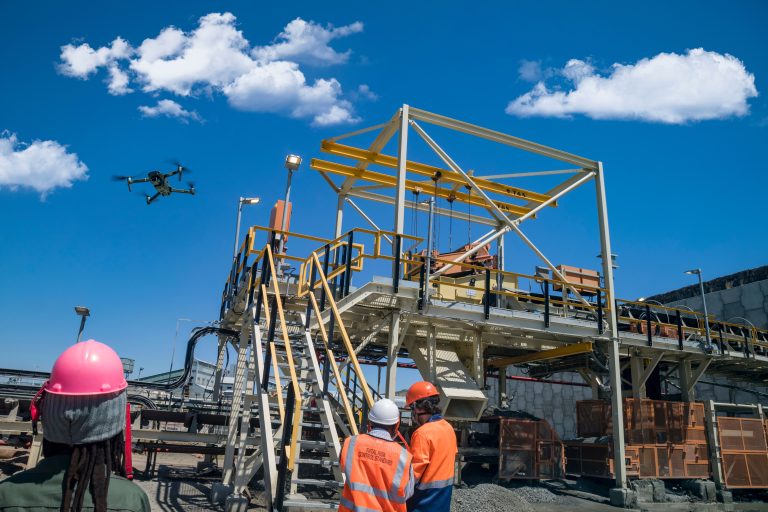
The adoption of automation, AI-driven exploration, and digital mining solutions is improving efficiency, reducing costs, and enhancing sustainability in African mining operations. Blockchain technology is also being explored for transparent mineral tracking and ethical sourcing. Drones, IoT, and predictive analytics are transforming how mines operate, improving safety and productivity.
4. Sustainable and Ethical Mining Practices
With increasing global scrutiny, Africa is moving towards responsible mining practices, including community engagement, environmental sustainability, and compliance with ESG (Environmental, Social, and Governance) standards. Water conservation, reduced carbon emissions, and land rehabilitation efforts are becoming key focus areas. More mining firms are committing to net-zero carbon footprints and responsible sourcing initiatives.
5. Infrastructure Development and Regional Integration
Governments are investing in transport networks, ports, and energy infrastructure to support mining activities. The African Continental Free Trade Area (AfCFTA) is also expected to facilitate intra-African trade in mining products, increasing regional collaboration and efficiency. Railways, roads, and power projects linked to mines are expected to boost production efficiency and reduce costs.
Challenges Facing Mining in Africa
- Despite its potential, the African mining industry faces several challenges that stakeholders must navigate:
- Infrastructure Gaps Limited railway and port capacity hampers mineral exports.
- Unstable electricity supply affects operations, especially in remote areas.
- The rise of renewable energy solutions to power mining operations.
- Investment in infrastructure is needed to increase efficiency and reduce operational bottlenecks.
2. Environmental and Social Concerns
- Deforestation, pollution, and land degradation caused by mining activities.
- Community conflicts over land use, royalties, and employment.
- Sustainable mining initiatives aimed at reducing environmental harm.
- Companies need to improve engagement with local communities to maintain social license to operate.
3. Lack of Local Beneficiation
- Many minerals are exported in raw form, limiting local industrial growth and economic benefits.
- The need for more mineral processing plants to boost in-country value addition.
Government incentives for domestic mineral refinement and industrialization. - Building processing plants and industrial zones near mining sites will boost job creation.
Future Outlook: The Next Frontier for Mining in Africa
With proactive policies and strategic investments, the future of mining in Africa is promising. Key trends shaping the industry include:
- Increased Digitalization – AI, blockchain, and big data analytics will enhance exploration and mining efficiency.
- Green Energy Integration – Adoption of renewable energy in mining operations to reduce carbon footprints.
- Expansion of Battery Metals Mining – The rise of electric vehicles (EVs) will drive demand for cobalt, lithium, and nickel.
- Public-Private Partnerships (PPPs) – Governments are collaborating with the private sector to develop sustainable mining projects.
- Enhanced Local Participation – Policies that prioritize local workforce training and technology transfer to African communities.
- Smart Mines and Automation – The integration of AI-driven predictive maintenance and automated drilling.
- Sustainable Supply Chains – Transparent and ethically sourced minerals for global markets.
Mining in Africa remains a critical economic pillar with vast potential for growth, investment, and sustainability. For stakeholders, professionals, and investors, understanding the evolving landscape is key to unlocking opportunities. By leveraging technology, ensuring ethical practices, and enhancing local beneficiation, Africa’s mining sector can become a model for sustainable economic transformation.